The Great Beijing Bean Juice Adventure: Conquering Douzir, One Sour Sip at a Time
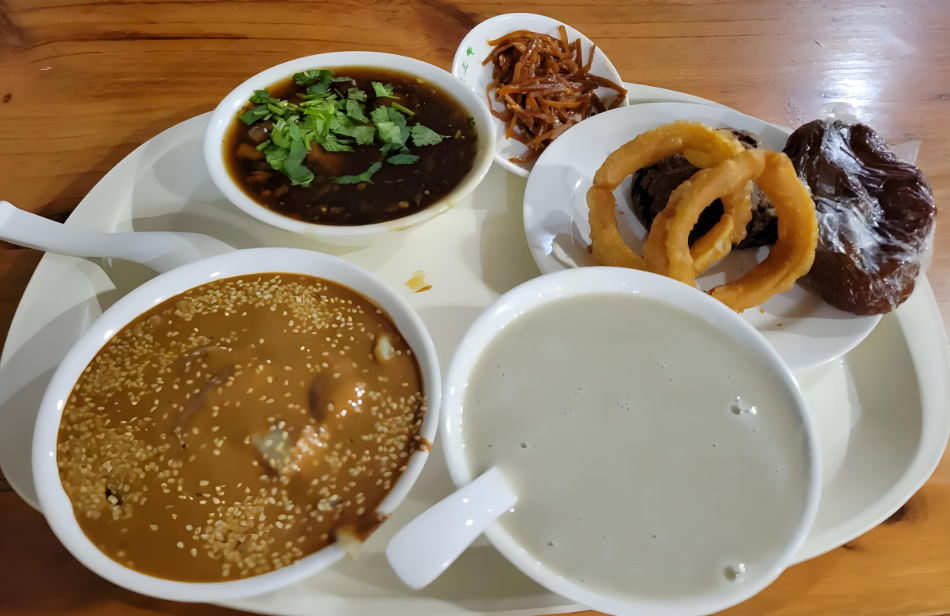
Forget the Forbidden City’s grandeur or the Great Wall’s majesty for a moment. If you truly want to dive headfirst into the raw, unfiltered soul of Old Beijing, you need to confront its most iconic, most polarizing culinary emblem: 豆汁儿 (Dòuzhīr), the legendary bean juice name that inspires equal parts devotion and dread.
This isn’t your average soy milk. Douzir is Beijing’s fermented sourdough starter in liquid form – a pungent, acquired taste that’s been fueling locals and baffling outsiders for centuries. Made from mung beans (not soybeans!), its creation is a fascinating alchemy. The bean juice recipe starts with grinding dried mung beans, soaking them, and then patiently allowing natural lactic acid bacteria to work their magic over hours of fermentation. The result? A thin, greyish-green liquid with a complex aroma often described as… challenging. Think tangy sourdough, damp earth, faintly cheesy, and undeniably funky. It’s an experience far removed from the neutral smoothness of Western soy beverages.
So, why would anyone willingly subject themselves to this? For the initiated, Douzir is pure comfort. It’s deeply woven into the fabric of Beijing life, a taste of home and history served steaming hot in humble bowls. Beyond nostalgia, it boasts surprising bean juice benefits. Traditionally lauded as a digestive aid (“Xiaohua hao” – helps digestion!), it’s packed with probiotics from fermentation, protein, B vitamins, and minerals. Locals swear by its cooling properties in summer and its ability to settle the stomach. While not a direct bean juice egg substitute in baking (its flavor is far too assertive!), its protein content does make it a valuable plant-based nutrient source within its traditional context.
Finding authentic Douzir is a quest in itself. Forget fancy hotel buffets. You need to head to the heart of local life. Dedicated bean juice cafe spots like the legendary Baodu Feng near Qianmen or the bustling Douzir Li in Xicheng District are pilgrimage sites. Stepping inside is a sensory immersion. The air hangs thick with that signature sour tang. You’ll see locals – often older gentlemen – hunched over bowls, expertly wielding their chopsticks. The standard bean juice menu is beautifully simple yet essential: a bowl of steaming Douzir, always paired with fiery pickled mustard greens (雪里蕻, Xuělǐhóng) to cut through the sourness, and a couple of crisp, hollow Jiaoquan (焦圈, deep-fried wheat rings) for dipping and crunch. This holy trinity is non-negotiable. Attempting Douzir solo is like tackling Everest without oxygen – possible for the supremely experienced, but ill-advised for beginners.
Now, the moment of bean juice judgment. Your first sip. Be prepared. The initial wave is a powerful sourness, bracingly acidic, followed by deep earthy, fermented notes. It’s intense. It’s confronting. It’s absolutely nothing like you expect. This is where the bean juice meme potential explodes! Countless videos online capture the hilarious, wide-eyed, often horrified reactions of first-time tasters – foreigners and younger Chinese alike. The spectrum of expressions – from polite bewilderment to outright gagging – is priceless. Douzir has become an internet shorthand for “acquired taste extremes” and a genuine test of cultural open-mindedness. Embrace the meme! Document your own reaction; it’s a rite of passage.
But how do the pros do it? Observe a Beijinger. There’s a practiced technique. They might take a small bite of the salty, crunchy Jiaoquan first. Then, a quick slurp of the hot Douzir – not a delicate sip, but a confident intake, almost like a lacrosse player swiftly scooping the ball. Think of it as bean juice la crosse – a swift, decisive motion to get it past the initial shock sensors on the tongue. Immediately chase it with a bite of the pungent pickled greens. The interplay is key: the sour bean juice, the salty pickle, the oily crunch of the Jiaoquan create a wild, addictive harmony that keeps locals coming back.
Conquering Douzir is more than just eating; it’s an initiation. It’s understanding that Beijing’s heart isn’t always polished or immediately pleasing. It’s robust, complex, layered with history, and demands a bit of effort to appreciate. That first challenging sip is your badge of honor. When you can sit in a noisy bean juice cafe, confidently navigating the bean juice menu, and take that slurp without flinching (or maybe just a small one!), you’ve connected with something profoundly local. You’ve moved beyond the tourist facade.
So, brave traveler, when you wander the hutongs, seek out the steamy windows and the telltale aroma. Order the set: “Yī wǎn dòuzhīr, yīdiǎn er xuělǐhóng, liǎng ge jiāoquan” (一碗豆汁儿,一点儿雪里蕻,两个焦圈). Take a breath. Channel your inner bean juice la crosse champion. Embrace the sour, the salty, the crunchy. Join the centuries-old tradition. Whether you end up loving it, hating it, or landing somewhere intriguingly in between, you’ll have tasted the real, unfiltered spirit of Beijing. And that story – complete with your authentic reaction, your personal bean juice judgment – will be infinitely more memorable than any postcard-perfect snapshot. The bean juice name, Douzir, will forever echo in your travel memories, a potent symbol of adventure embraced.