Beijing’s Ultimate Comfort Food: The Magic of Zha Jiang Mian (炸酱面)
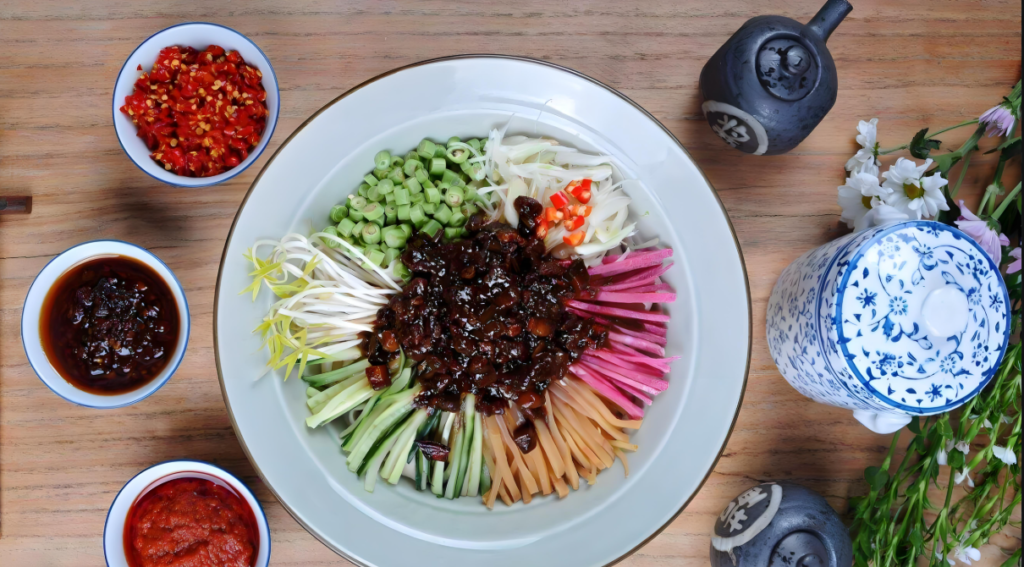
Forget the fancy banquets for a moment. The true soul of Beijing’s cuisine often simmers in unassuming noodle shops tucked down ancient hutongs, where the air hangs thick with the rich, savory-sweet aroma of bubbling meat sauce. This is the realm of Zha Jiang Mian (炸酱面), or “Fried Sauce Noodles” – arguably Beijing’s most beloved, iconic, and deeply comforting dish. More than just sustenance, it’s a cultural touchstone, a taste of home, and a textural symphony that captures the city’s down-to-earth spirit. For travelers seeking an authentic taste of everyday Beijing life, mastering the art of Zha Jiang Mian is an essential culinary adventure.
What Exactly Is Zha Jiang Mian?
Imagine a generous mound of thick, chewy, hand-pulled or knife-shaven wheat noodles (手擀面, shǒu gǎn miàn), glistening under a luxurious blanket of deep, dark brown sauce studded with finely minced pork (or sometimes beef). The sauce is intensely savory, carrying complex umami notes, a hint of sweetness, and a satisfying richness. But the experience doesn’t stop there. Arriving alongside the sauced noodles is a vibrant palette of fresh, crisp toppings – think cucumber matchsticks, julienned carrots (often lightly blanched), crunchy bean sprouts, and a generous sprinkle of sliced scallion greens.
The Ritual: The magic truly happens at your table. Using your chopsticks, you vigorously mix everything together – the warm, saucy noodles, the cool, crisp vegetables – creating a harmonious blend of textures and temperatures in every bite. It’s hearty, deeply flavorful, messy in the best possible way, and utterly addictive.
The Heart and Soul: Demystifying the “Zha Jiang” Sauce
The dish’s name, “炸酱” (Zhá Jiàng), literally means “fried sauce.” This is the undisputed star of the show. Forget Italian ragù or Bolognese; Zha Jiang sauce is uniquely Chinese, deeply rooted in Beijing tradition, and relies on fermented bean pastes for its signature depth.
- The Key Players: Authentic Beijing-style Zha Jiang Sauce uses two crucial pastes:
- Huang Jiang (黄酱): Yellow soybean paste. This is the backbone, providing a deep, fermented, slightly funky, salty umami punch. It’s thicker and grainier than regular soy sauce.
- Tian Mian Jiang (甜面酱): Sweet wheat paste. This adds complexity, a distinct sweetness, a touch of malty richness, and helps balance the saltiness of the huang jiang. It’s smoother and darker.
- The “Zha” (Frying) Technique: The name isn’t arbitrary! The magic happens when these pastes are vigorously stir-fried (“zhá”) in oil, usually with the rendered fat from the minced pork. This crucial step:
- Cooks out any raw flavor from the pastes.
- Deepens their color and complexity.
- Infuses the oil with intense flavor that coats every strand of noodle.
- Creates a rich, glossy, clingy sauce texture.
A Taste of History: From Humble Roots to National Treasure
Zha Jiang Mian’s origins are believed to lie in Shandong province, but it found its true home and iconic status in Beijing, evolving over centuries. While its exact beginnings are humble (a practical way to preserve meat with flavorful pastes), it became a staple for commoners and eventually graced tables across society. Its popularity soared in the Qing Dynasty (1644-1912), cementing its place as the quintessential Beijing noodle dish. Eating Zha Jiang Mian today connects you directly to generations of Beijingers who have found comfort and satisfaction in this simple yet profound combination.
How to Eat Zha Jiang Mian Like a Local
- Admire the Presentation: Take a moment to appreciate the bowl: the dark, saucy noodles central, surrounded by the colorful “frame” of fresh toppings.
- Mix Thoroughly: Don’t be shy! Use your chopsticks to dig in and mix everything together with gusto. Ensure every noodle gets coated in sauce and mingles with the vegetables. The sound of slurping is perfectly acceptable!
- Savor the Symphony: Experience the contrast: the chewiness of the noodles, the rich, savory-sweet meatiness of the sauce, the refreshing coolness and crunch of the cucumber and bean sprouts, the aromatic bite of the scallions. It’s all about the harmony.
- Optional Additions: Some like a splash of black vinegar (陈醋, chéncù) for extra tang, or a dab of raw garlic paste (蒜泥, suànní) for a pungent kick. Chili oil is also a popular addition for heat lovers.
Finding the Perfect Bowl in Beijing
Seeking authentic Zha Jiang Mian is a delicious quest:
- Traditional Noodle Shops (面条馆, Miàntiáo Guǎn): Your best bet. Look for simple storefronts, often bustling with locals. Signs proudly displaying “炸酱面” (Zhá Jiàng Miàn) are a giveaway.
- Hutong Hideaways: Wander the historic alleyways like Nanluoguxiang, Gulou (Drum Tower) area, or Dongsi. Family-run eateries tucked away here often serve incredibly authentic, soul-warming versions.
- Local Markets & Food Streets: Explore markets like Wangfujing Snack Street (look beyond the touristy skewers) or areas around Niujie Mosque. Street food stalls or small vendors within markets frequently offer excellent, affordable bowls.
- Dedicated Chains: For consistency and ease, try reputable chains like “Old Beijing Zhajiang Noodle King” (老北京炸酱面大王). They offer a standardized, reliably tasty experience.
- Beyond Noodle Shops: Many Beijing restaurants, including those specializing in other cuisines or even dumplings, will often have Zha Jiang Mian on their menu as a beloved staple.
Bringing Beijing Home: Can You Make Zha Jiang Mian? (Zha Jiang Mian Recipe!)
Absolutely! While achieving perfect restaurant-level authenticity takes practice, making a deeply satisfying Zha Jiang Mian at home is achievable. The core Zha Jiang Mian recipe revolves around the sauce:
Simplified Homemade Zha Jiang Sauce Recipe:
- Ingredients:
- 250g (½ lb) ground pork (preferably with some fat)
- 2-3 tbsp cooking oil (peanut or vegetable)
- 1 tbsp finely minced ginger
- 1 tbsp finely minced garlic
- 2-3 scallions (whites minced, greens sliced for garnish)
- 2 tbsp Huang Jiang (Yellow Soybean Paste) (find at Asian grocery stores or online)
- 1 tbsp Tian Mian Jiang (Sweet Wheat Paste) (find at Asian grocery stores or online)
- 1 tsp sugar (essential for balance!)
- ½ cup water or low-sodium broth
- (Optional: 1 tsp Shaoxing wine, ½ tsp dark soy sauce for color)
- Method:
- Brown the Pork: Heat oil in a wok or deep skillet over medium-high heat. Add pork and stir-fry, breaking it up, until cooked through and nicely browned (some crispy bits are good!). Remove excess fat if needed, leaving about 1-2 tbsp.
- Sauté Aromatics: Add minced ginger, garlic, and scallion whites. Stir-fry for 30-60 seconds until fragrant.
- “Fry” the Paste (The Key Step!): Reduce heat to medium. Add the huang jiang and tian mian jiang pastes directly to the pan with the pork and aromatics. Stir constantly, frying the pastes in the oil for 1-2 minutes. This cooks off the raw taste and deepens the flavor dramatically.
- Simmer & Combine: Add the sugar and water/broth (and Shaoxing wine/dark soy if using). Stir well, scraping the bottom. Bring to a simmer, then reduce heat to low.
- Thicken: Let the sauce bubble gently, uncovered, for 15-20 minutes, stirring occasionally, until it thickens considerably into a rich, glossy sauce coating the meat. Taste and adjust (might need a tiny pinch of salt, but pastes are salty!).
- Serve: Ladle the hot sauce over cooked thick wheat noodles. Top generously with cucumber matchsticks, shredded carrots, bean sprouts (blanched briefly if preferred), and sliced scallion greens. Mix thoroughly at the table!
Why Zha Jiang Mian is a Must-Try for Beijing Travelers
- Authentic Cultural Experience: It’s not tourist food; it’s what Beijingers genuinely love and eat regularly.
- Affordable & Accessible: Found everywhere, from simple stalls to restaurants, often at very reasonable prices.
- Unique Flavor Profile: The fermented bean paste sauce offers a deep, complex umami unlike anything in typical Western cuisine.
- Interactive & Fun: Mixing your own bowl at the table is part of the charm and engagement.
- Comforting & Satisfying: It’s hearty, flavorful, and deeply nourishing – perfect after a day of sightseeing.
In Conclusion: Dive into the Bowl!
Your Beijing adventure is incomplete without seeking out a steaming bowl of Zha Jiang Mian. Venture beyond the imperial palaces and grand boulevards into the vibrant, lived-in hutongs. Follow the enticing aroma, find a bustling noodle shop, and embrace the simple ritual. Mix that rich, dark sauce with the fresh, crunchy vegetables and chewy noodles. Take that first flavorful, texturally exciting bite. In that moment, you’re not just eating noodles; you’re tasting centuries of Beijing tradition, community, and culinary soul. It’s comfort, history, and pure deliciousness in a bowl. So, grab your chopsticks, and 开吃吧! (Kāi chī ba! – Let’s eat!)